
Next-Generation Digital Experience Centers and Interactive Innovation
Introduction
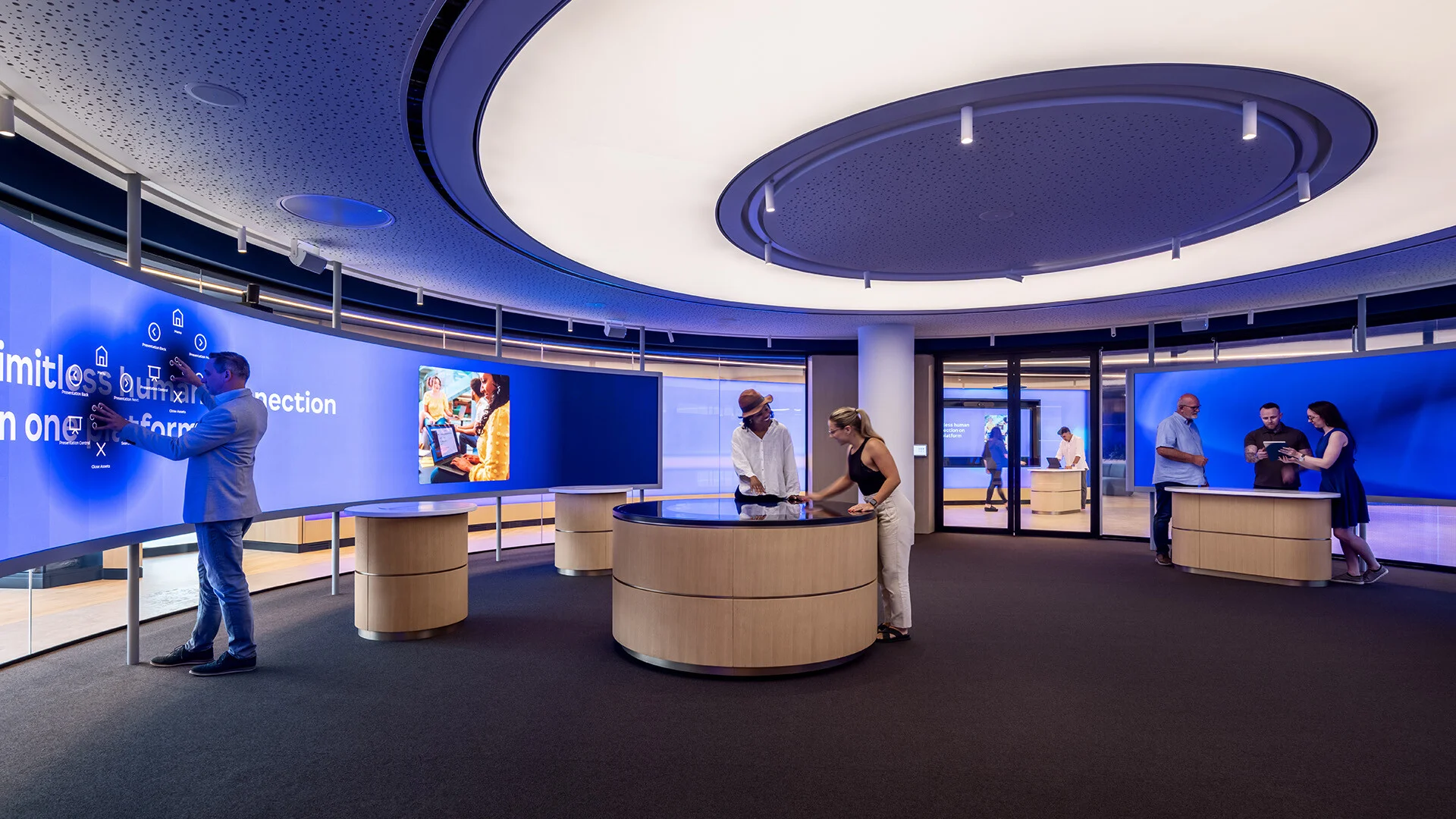
Next-generation digital experience centers are redefining how businesses present technology solutions. Unlike traditional demo spaces, these environments combine immersive tools, real-time collaboration, and interactive storytelling. As a result, organizations create stronger engagement and clearer value demonstrations.
Today, enterprises use these centers to showcase XR, AI, and spatial computing solutions in practical scenarios.
Why Next-Generation Digital Experience Centers Matter
First, they improve customer understanding. Instead of static presentations, visitors experience live demonstrations.
Second, interactive systems increase engagement levels. When users participate directly, they retain more information.
In addition, digital experience environments support remote collaboration. Therefore, global teams can connect in shared immersive spaces.
Because of these advantages, businesses see higher conversion and partnership success rates.
Core Technologies Powering Interactive Innovation
Several technologies enable these advanced environments.
- XR and Spatial Computing
Devices such as Microsoft HoloLens allow spatial interaction and real-time visualization.
- Real-Time Development Platforms
Solutions powered by Unity Technologies support immersive application deployment.
- AI-Driven Analytics
Interactive systems track engagement data and optimize user journeys.
As a result, digital experience centers become intelligent innovation hubs.
Applications Across Industries
Next-generation digital experience centers support multiple sectors.
Enterprise Technology
Companies demonstrate complex solutions in simplified, immersive formats.
Manufacturing
Industrial simulations showcase workflow optimization.
Healthcare
Medical innovations are presented using interactive 3D visualization.
Education
Institutions create immersive learning environments for students.
Consequently, interactive innovation improves communication and adoption rates.
Benefits of Digital Experience Innovation
Moreover, organizations gain measurable outcomes:
- Higher engagement levels
- Improved product understanding
- Faster decision-making
- Stronger brand differentiation
Because immersive environments provide hands-on interaction, stakeholders make informed choices quickly.
Challenges and Implementation Considerations
However, building next-generation digital experience centers requires strategic planning.
- Infrastructure investment
- Technology integration complexity
- Skilled development teams
- Continuous content updates
Even so, long-term benefits often outweigh initial challenges.
The Future of Interactive Innovation Centers
Looking ahead, next-generation digital experience centers will integrate AI personalization and cloud-based XR collaboration. As immersive technologies mature, digital innovation spaces will become central to enterprise strategy.
Therefore, organizations investing early in immersive experience design will maintain competitive advantages.
Conclusion
Next-generation digital experience centers are redefining interactive innovation by merging technology, creativity, and user engagement. As immersive and intelligent platforms, they empower organizations to communicate ideas, showcase solutions, and drive meaningful digital transformation.