Introduction
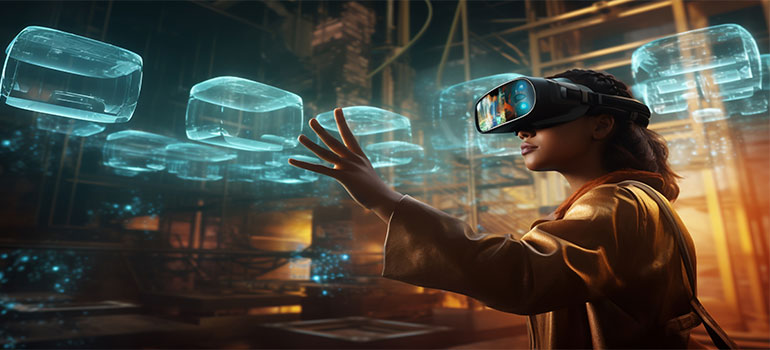
The rise of XR and MR is reshaping how people interact with digital environments. Extended Reality (XR) combines virtual, augmented, and mixed reality technologies into a unified ecosystem. Meanwhile, Mixed Reality (MR) blends physical and digital elements in real time. As a result, users experience more natural and immersive interaction.
Today, businesses across industries are adopting immersive systems to improve engagement and productivity.
Why the Rise of XR and MR Matters for Businesses
First, immersive technologies improve user experience. Instead of viewing information on flat screens, users interact with spatial content.
Second, XR and MR increase collaboration efficiency. Teams can meet in shared digital environments, regardless of location.
In addition, these technologies reduce training costs through simulation-based learning. Therefore, organizations see measurable operational benefits.
Key Drivers Behind the Rise of XR and MR
Several factors are accelerating adoption.
- Hardware Innovation
Devices such as Microsoft HoloLens enable advanced spatial interaction.
- Development Platforms
Tools powered by Unity Technologies simplify immersive application development.
- Enterprise Digital Transformation
Companies integrate immersive systems into workflow optimization strategies.
Because of these drivers, immersive ecosystems are expanding rapidly.
Applications Across Industries
The rise of XR and MR impacts multiple sectors.
Healthcare
Doctors use mixed reality overlays during complex procedures.
Education
Students explore 3D models and virtual simulations.
Manufacturing
Technicians receive step-by-step holographic instructions.
Retail
Brands create immersive product experiences to increase engagement.
Consequently, immersive interaction is becoming mainstream.
Benefits of XR and MR Integration
Moreover, organizations gain several advantages:
- Improved engagement
- Faster decision-making
- Reduced operational costs
- Enhanced remote collaboration
As immersive systems mature, these benefits continue to grow.
Challenges in XR and MR Adoption
However, adoption also presents challenges.
- High hardware costs
- Infrastructure requirements
- User training needs
- Data security concerns
Even so, continued innovation is addressing these limitations.
The Future of XR and MR in the Digital World
Looking ahead, the rise of XR and MR will integrate with artificial intelligence and spatial computing. As digital transformation accelerates, immersive environments will become essential tools for communication and innovation.
Conclusion
The rise of XR and MR is redefining interaction in the digital world by making technology more immersive, intuitive, and human-focused. By seamlessly blending physical and digital environments, these technologies are transforming user experiences across industries.