

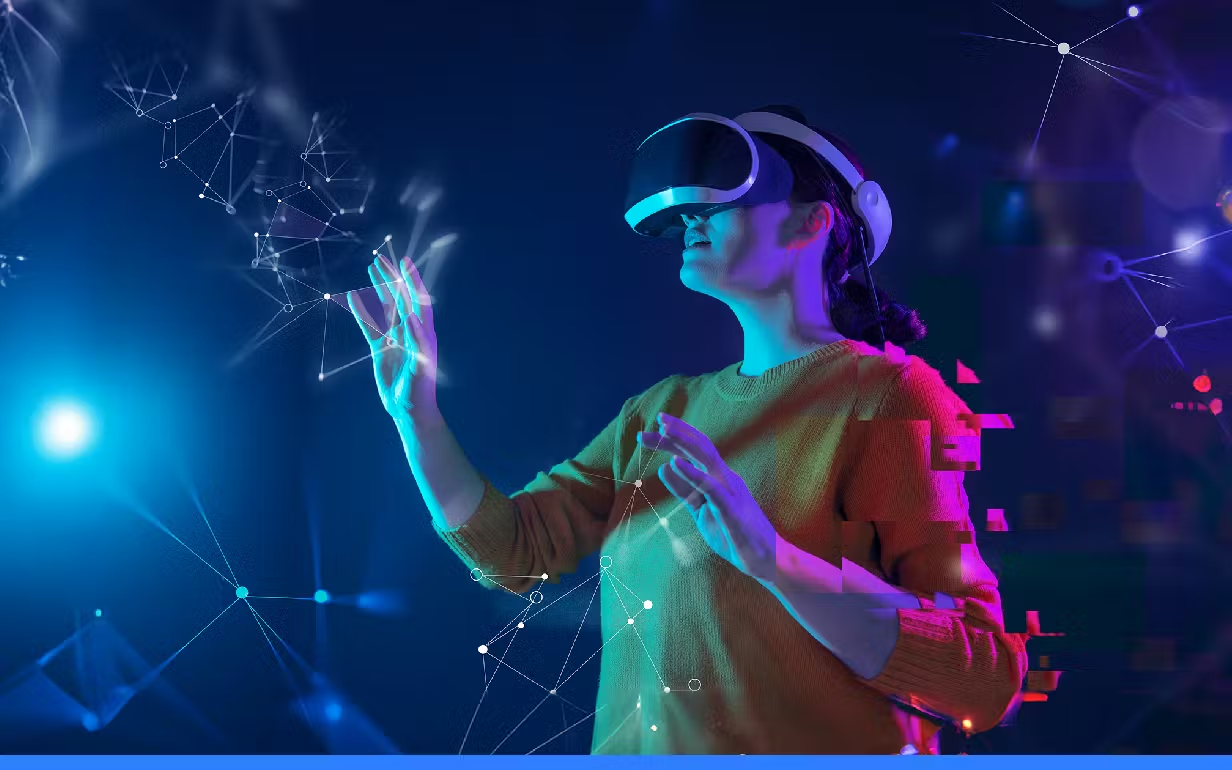
The Role of Digital Experience Centers in Immersive Technologies
Introduction
Immersive technologies are transforming how businesses engage with customers. However, digital innovation requires more than software development. It also demands environments where people can explore and experience technology firsthand. Therefore, digital experience centers in immersive technologies are becoming essential.
These centers combine XR, AR, VR, AI, and interactive platforms into one collaborative space. As a result, businesses can demonstrate solutions, test prototypes, and showcase innovation in real time.
At SelectronWave Technologies, we view digital experience centers as strategic hubs for immersive transformation.
What Are Digital Experience Centers?
A digital experience center is a dedicated environment designed to showcase advanced technologies. Unlike traditional demo rooms, these centers offer interactive and immersive engagement.
Visitors can:
- Explore XR simulations
- Interact with virtual prototypes
- Experience real-time data visualization
- Participate in collaborative innovation sessions
Because these environments are hands-on, they create stronger understanding and trust.
Why Digital Experience Centers Matter in Immersive Technologies
Immersive solutions often require demonstration to communicate value. Therefore, experience centers bridge the gap between concept and implementation.
Digital experience centers in immersive technologies provide:
- Live XR demonstrations
- Real-time collaboration tools
- Industry-specific immersive scenarios
- Data-driven performance insights
As a result, decision-makers can evaluate solutions more effectively.
Moreover, these centers reduce uncertainty during technology adoption. When stakeholders experience immersive systems directly, confidence increases.
Enhancing Customer Engagement
Traditional presentations rely on slides and static visuals. However, immersive centers enable interactive storytelling.
For example, visitors can explore 3D environments powered by platforms such as Unity Technologies. Consequently, product demonstrations become more engaging and memorable.
In addition, immersive environments allow customers to test real-world use cases. Therefore, engagement shifts from passive viewing to active participation.
Supporting Innovation and Prototyping
Digital experience centers also function as innovation labs. Teams can prototype immersive applications, test workflows, and refine user interfaces.
Because immersive technologies evolve rapidly, continuous experimentation is essential.
Companies often integrate advanced devices like Meta Quest 3 to test performance and usability within these centers.
As a result, development cycles become more agile and user-focused.
Industry Applications of Immersive Experience Centers
- Manufacturing
Manufacturers use immersive centers to simulate assembly lines and optimize workflows before deployment.
- Healthcare
Medical organizations demonstrate surgical simulations and patient education platforms.
- Retail
Brands create virtual showrooms that showcase products in realistic environments.
- Education and Training
Institutions design immersive learning modules for hands-on skill development.
Across industries, digital experience centers in immersive technologies accelerate innovation and collaboration.
Business Benefits
Organizations that invest in immersive experience centers gain measurable advantages:
- Stronger client engagement
- Faster decision-making cycles
- Reduced implementation risks
- Improved collaboration between teams
Furthermore, immersive analytics provide insights into user behavior during demonstrations. Therefore, businesses can refine strategies continuously.
Challenges and Future Growth
Although digital experience centers offer significant value, they require strategic planning. First, infrastructure costs must be managed carefully. Second, content must stay updated with evolving technologies.
However, as hardware becomes more affordable and scalable, immersive centers will become mainstream.
In the future, digital experience centers in immersive technologies will integrate AI-driven personalization, remote collaboration tools, and cloud-based XR platforms.
Conclusion
Digital experience centers play a vital role in immersive transformation. By combining XR, AI, and interactive technologies into collaborative environments, they enable businesses to showcase innovation effectively.
As immersive ecosystems expand, organizations that invest in experience-driven engagement will lead digital transformation.
At SelectronWave Technologies, we design immersive solutions that empower businesses to build impactful digital experience centers for the future.