
AR/VR Powering Next-Generation Immersive Solutions
Introduction
Digital interaction is evolving rapidly. Users no longer want passive experiences. Instead, they expect immersive and interactive environments. As a result, AR/VR immersive solutions are shaping the next generation of digital engagement.
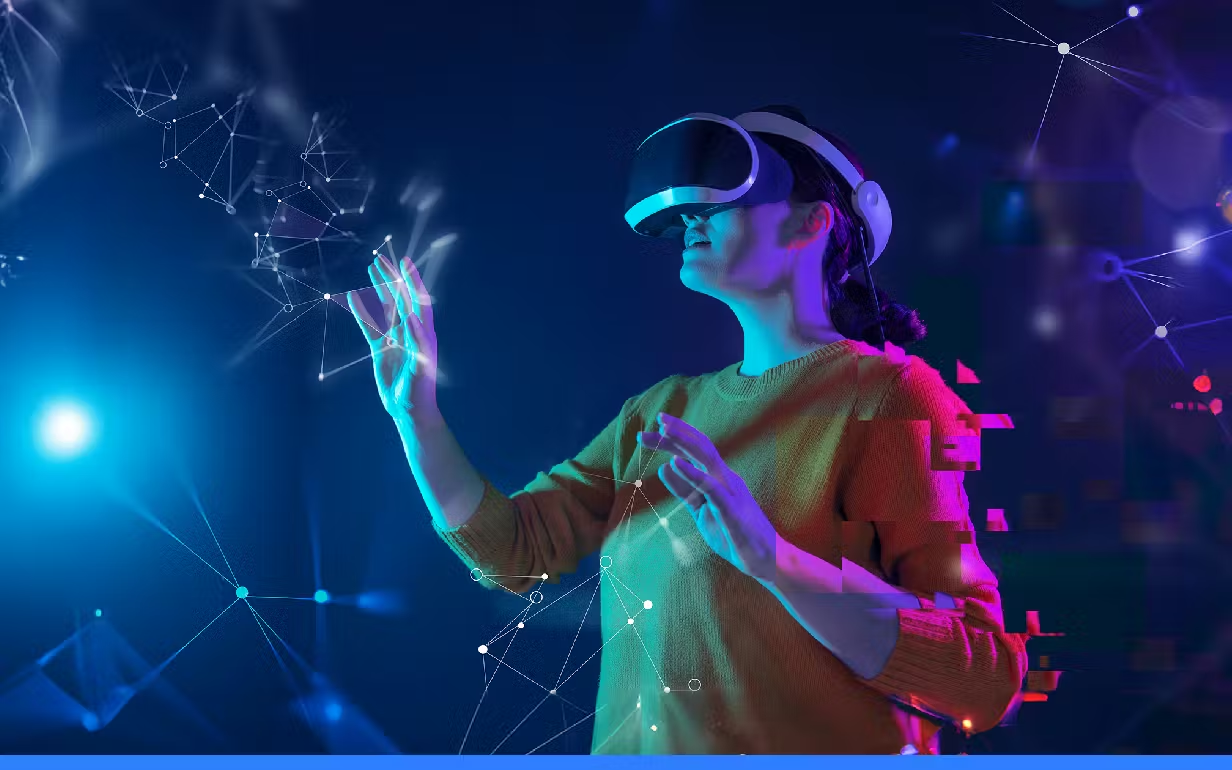
Augmented Reality (AR) enhances the physical world with digital overlays. Virtual Reality (VR), on the other hand, creates fully immersive environments. Together, these technologies transform how people learn, shop, train, and collaborate.
At SelectronWave Technologies, we build AR/VR immersive solutions that combine innovation with usability.
Understanding AR and VR Technologies
AR integrates digital content into real-world surroundings. For example, mobile AR apps place 3D objects onto physical spaces. Meanwhile, VR transports users into entirely virtual environments through headsets.
Devices such as Meta Quest 3 demonstrate how VR delivers high-quality immersive experiences. Similarly, AR-enabled smartphones and smart glasses enhance real-time interaction.
Because of these advancements, immersive solutions are becoming more accessible and scalable.
Why AR/VR Immersive Solutions Matter
Traditional digital platforms rely on screens and touch inputs. However, immersive technologies engage multiple senses. Therefore, user engagement increases significantly.
AR/VR immersive solutions offer:
- Real-time 3D interaction
- Enhanced visualization
- Context-aware digital overlays
- Natural gesture and voice control
As a result, users retain information better and interact more deeply with content.
Industry Applications Driving Innovation
- Education and Training
AR/VR immersive solutions improve experiential learning. For instance, trainees can simulate real-world scenarios without risk. Consequently, skill development becomes faster and more effective.
- Healthcare
Medical professionals use VR simulations for surgical planning. In addition, AR assists in real-time diagnostics. Therefore, patient outcomes improve through better visualization.
- Manufacturing and Engineering
Engineers use immersive visualization tools to review product designs before production. As a result, errors decrease and collaboration improves.
- Retail and Marketing
Virtual try-ons and immersive showrooms enhance customer confidence. Moreover, interactive experiences strengthen brand engagement.
Across industries, AR/VR immersive solutions create measurable business value.
The Role of AI and Advanced Hardware
Artificial Intelligence enhances immersive environments by enabling adaptive responses. For example, AI can personalize content based on user behavior.
Meanwhile, advanced semiconductor platforms support real-time rendering and motion tracking. Companies such as Qualcomm develop XR-focused processors that improve performance and efficiency.
Because of hardware optimization, immersive devices are becoming lighter and more powerful.
Benefits for Businesses
Organizations investing in AR/VR immersive solutions gain strategic advantages:
- Improved customer engagement
- Reduced training costs
- Faster product development cycles
- Stronger competitive differentiation
Furthermore, immersive analytics provide deeper behavioral insights. Therefore, companies can refine experiences continuously.
Challenges and Future Growth
Although immersive technologies offer significant benefits, adoption requires careful planning.
First, content development must align with user needs. Second, hardware compatibility and scalability must be considered. However, rapid technological progress is reducing these barriers.
As 5G connectivity expands and spatial computing improves, immersive solutions will become mainstream. Consequently, businesses that adopt early will lead digital transformation.
Conclusion
AR/VR immersive solutions are redefining digital interaction. By combining real-time engagement, spatial awareness, and AI-driven intelligence, these technologies power next-generation immersive environments.
As industries continue to innovate, organizations that invest in AR and VR will unlock new opportunities for growth and engagement.
At SelectronWave Technologies, we design scalable, user-focused immersive solutions that shape the future of digital experiences.