
Digital Art & Animation in AR, VR, and Metaverse Environments
Introduction
Digital art and animation play an essential role in immersive technologies. They bring virtual environments to life and create engaging experiences for users. As AR and VR platforms grow, the demand for high-quality digital visuals continues to increase.
Today, artists and developers collaborate to design interactive environments that combine creativity with advanced technology. Because of this collaboration, immersive platforms are becoming more realistic and visually appealing.
Organizations like SelectronWave Technologies explore innovative ways to integrate creative design with emerging immersive technologies.
Digital Art and Animation in AR and VR Experiences
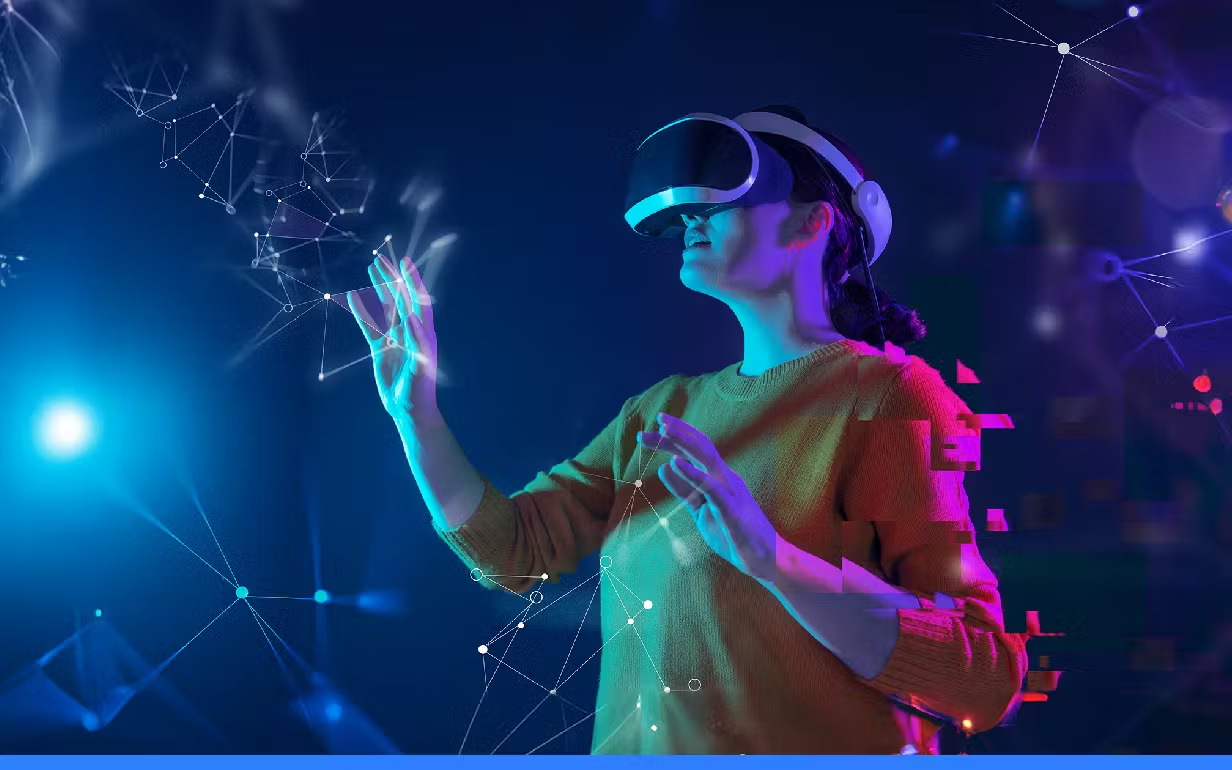
AR and VR environments rely heavily on visual storytelling. Through detailed 3D models, animations, and interactive graphics, users can explore immersive digital worlds.
For example, augmented reality overlays digital objects onto the physical environment. Virtual reality, on the other hand, creates fully simulated spaces where users can interact with digital elements.
As a result, creative digital design becomes a key factor in delivering engaging user experiences.
Role of Animation in Metaverse Environments
The metaverse depends on dynamic digital environments. Animation allows characters, objects, and virtual spaces to behave realistically.
In addition, animated interactions improve engagement in gaming, virtual collaboration, and digital events. Because of this, animation tools are becoming increasingly important for immersive platform development.
Developers also combine motion capture and real-time rendering to produce more lifelike virtual interactions.
Benefits of Digital Art and Animation in Immersive Platforms
Creative visual design offers many advantages in immersive technologies.
First, it enhances user engagement through interactive visuals. Second, it improves storytelling and brand experiences in digital environments.
Moreover, well-designed visuals make virtual spaces more realistic and appealing. Therefore, organizations invest heavily in creative design and animation technologies.
Future of Digital Art and Animation in Immersive Technology
The future of digital art and animation will evolve alongside immersive platforms. Advanced tools such as AI-assisted design and real-time rendering will continue to improve visual quality.
Industry research from Gartner suggests that immersive digital environments will expand rapidly in the coming years.
As technology advances, creative design will remain central to building engaging AR, VR, and metaverse experiences.
Conclusion
Digital art and animation are at the heart of AR, VR, and Metaverse environments, transforming how users experience and interact with digital worlds. By combining artistic creativity with immersive technology, organizations can deliver compelling, interactive, and future-ready digital experiences that resonate with audiences across industries.