

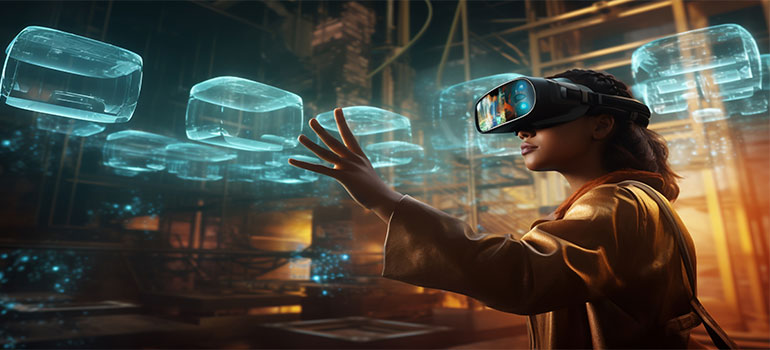
The Role of Digital Art & Animation in Immersive Experiences
Introduction to Digital Art in Immersive Experiences
Digital art in immersive experiences plays a crucial role in shaping how users interact with virtual environments. Today, AR and VR technologies depend heavily on creative visual design. Therefore, digital artists and animators contribute significantly to immersive innovation.
In the past, digital platforms relied mainly on static graphics. However, modern immersive systems require interactive and dynamic visuals.
What Is Digital Art in Immersive Experiences?
Digital art in immersive experiences helps create realistic virtual worlds. It shapes how users see and feel digital environments. Today, AR and VR platforms rely on strong visual design. Therefore, digital artists play an important role.
In the past, digital platforms used simple graphics. However, modern immersive systems require detailed 3D visuals and interactive elements. As a result, users experience deeper engagement.
How Digital Art Improves User Experience
Digital art creates objects, characters, and environments. For example, designers build 3D models that define virtual spaces. In addition, lighting and textures add realism.
Because of this, users feel more connected to the environment. Moreover, clear visual design makes navigation easier. Consequently, engagement levels increase.
Why Animation Matters in Immersive Technology
Animation adds movement and life to digital spaces. Without animation, virtual environments feel static. Therefore, developers use animation to create natural interactions.
For instance, animated avatars improve communication in virtual meetings. Similarly, training simulations become more effective with motion and interaction. As a result, animation strengthens immersive learning.
Applications Across Industries
Many industries use digital art and animation today.
Gaming and Entertainment
Game studios create immersive worlds using advanced design tools. As a result, players enjoy realistic storytelling.
Education and Training
Educational platforms use animated lessons to improve understanding. Furthermore, interactive visuals help students retain information.
Retail and Marketing
Brands use immersive product displays to attract customers. Therefore, digital art increases customer confidence and engagement.
The Future of Digital Art in Immersive Experiences
Technology continues to evolve. In addition, artificial intelligence now supports creative design. Because of these advancements, immersive platforms will become more realistic.
Looking ahead, digital art in immersive experiences will remain essential. Ultimately, creative design will define the future of AR and VR systems.
Conclusion
Digital art in immersive experiences transforms how users perceive and interact with technology. Instead of passive viewing, users now engage in dynamic digital worlds.