
Gesture Technologies and the Future of Immersive Experiences
Introduction
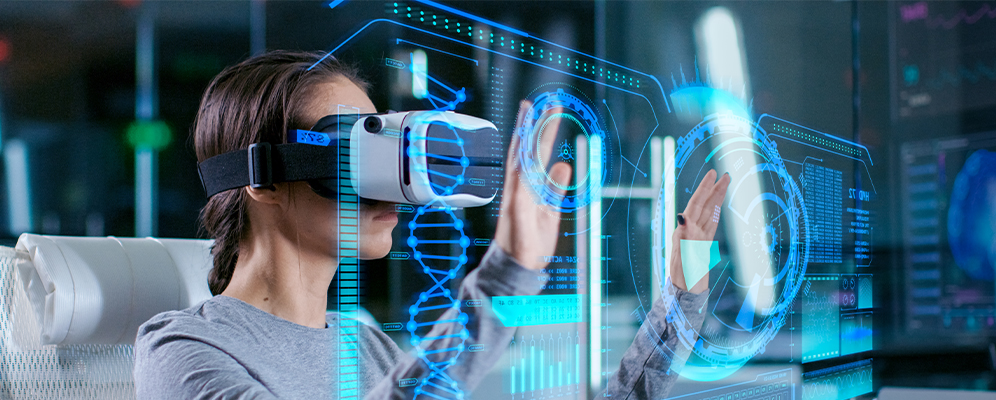
Gesture-based immersive experiences are transforming how people interact with XR environments. Instead of using controllers or keyboards, users can move their hands and bodies to control digital content. As a result, interaction becomes more natural and intuitive.
As immersive technologies evolve, gesture-driven interfaces are becoming essential for creating seamless human-computer interaction.
What Are Gesture Technologies?
Gesture technologies use sensors, cameras, and AI-based motion tracking systems to interpret physical movements as digital commands. Instead of relying on keyboards or touchscreens, users interact through hand movements, body motion, or spatial gestures.
Devices such as Microsoft HoloLens and platforms powered by Unity Technologies integrate advanced gesture recognition systems to enhance immersive applications.
These systems analyze motion patterns in real time, translating gestures into precise digital responses.
Gesture-based immersive experiences are transforming how people interact with XR environments. Instead of using controllers or keyboards, users can move their hands and bodies to control digital content. As a result, interaction becomes more natural and intuitive.
Today, immersive platforms rely on motion tracking and AI systems to create responsive digital spaces. Because of this, businesses are adopting gesture-driven systems faster than ever.
Why Gesture-Based Immersive Experiences Matter in XR
First, they remove physical barriers between users and technology. Users can point, rotate, and select objects in real time.
Second, touchless interaction improves safety and convenience. For example, hospitals and industrial facilities benefit from hands-free controls.
In addition, these systems increase engagement levels. When users interact naturally, they feel more connected to the experience.
How the Technology Works
Gesture-enabled systems use:
- Depth cameras
- Motion sensors
- AI recognition software
- Real-time spatial tracking
For example, devices like Microsoft HoloLens support advanced hand tracking. Similarly, platforms powered by Unity Technologies enable interactive 3D development.
Because these tools process data instantly, users experience minimal delay.
Applications Across Industries
Gesture-driven immersive systems are used in many sectors.
Healthcare:
Doctors use motion control during simulations and training.
Education:
Students manipulate 3D models using hand gestures.
Retail:
Customers explore products inside virtual showrooms.
Enterprise Training:
Employees practice real-world scenarios in XR simulations.
Therefore, organizations see improved engagement and faster learning outcomes.
Benefits of Gesture-Based XR Systems
Moreover, these systems provide several advantages:
- Improved user comfort
- Reduced hardware dependency
- Higher engagement rates
- Better accessibility
As technology advances, gesture accuracy continues to improve. Consequently, immersive environments feel more realistic.
Challenges and Future Growth
However, some challenges remain. Poor lighting conditions may affect tracking accuracy. In addition, long usage sessions can cause user fatigue.
Even so, AI improvements are reducing these issues. Companies such as Ultraleap are developing precise hand-tracking systems for XR platforms.
In the future, gesture integration will combine with haptics and spatial computing. As a result, immersive experiences will become more dynamic and responsive.
Conclusion
Gesture technologies are shaping the future of immersive experiences by enabling natural, touchless interaction and deeper engagement. As these technologies mature, they will become a fundamental component of next-generation immersive systems, transforming how users interact with digital environments.