

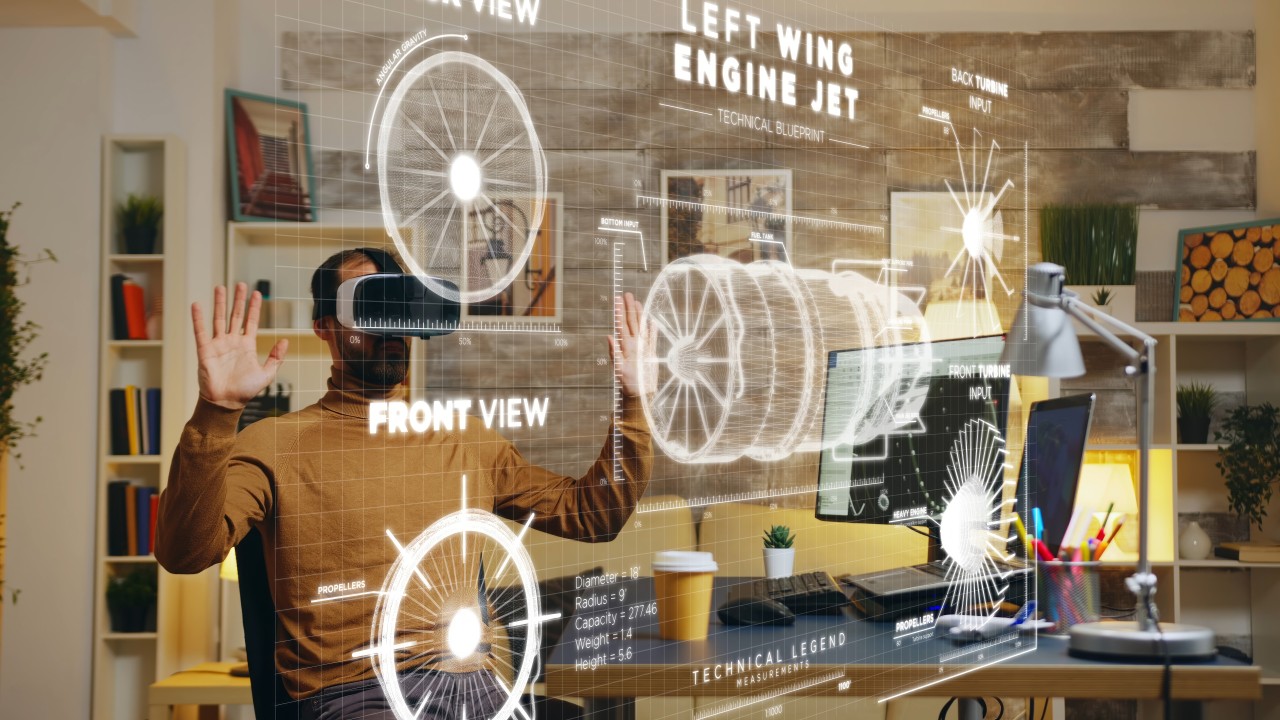
User-Focused Product Design in XR and Immersive Environments
Introduction
Extended Reality (XR) is changing the way people interact with digital environments. Today, businesses use XR for training, retail, healthcare, and education. As a result, immersive technology is becoming more common across industries.
Why User-Focused Design Matters in XR
Unlike traditional apps, XR systems place users inside three-dimensional spaces. Therefore, design mistakes feel more intense. Poorly designed experiences can cause confusion, fatigue, or motion discomfort.
For this reason, user-focused product design reduces risks by prioritizing:
Natural interaction patterns
Clear spatial orientation
Comfort and accessibility
Simple navigation and feedback
When users feel safe and confident, they engage more deeply. In addition, they are more likely to adopt the technology long term.
Designing for Human Behavior in 3D Spaces
In XR environments, users do more than click or scroll. Instead, they move, turn, gesture, speak, and explore.
Because of this, design must align with real-world behavior.
Spatial Awareness
Digital objects must respect scale and positioning. For example, oversized menus or poorly placed controls can break immersion. Therefore, proper depth and spacing are essential.
Interaction Simplicity
Controls should feel natural. If gestures or controller inputs are complex, users become frustrated. Consequently, simple interaction models improve usability.
Cognitive Load Management
Immersive spaces can easily overwhelm users. Too many visual elements reduce focus. To prevent this, designers should use clear layouts and guided steps.
By designing around natural movement and thinking patterns, XR solutions become easier to use.
Accessibility and Inclusivity in Immersive Design
User-focused product design in XR must support diverse users. Not everyone has the same physical ability or technical knowledge.
Therefore, inclusive design should include:
Adjustable interaction methods (gesture, voice, controller)
Clear text and strong color contrast
Defined safety boundaries
Flexible session duration to reduce fatigue
When accessibility improves, usability also improves. Moreover, inclusive design expands market reach and brand trust.
AI and Personalization in User-Centric XR
Artificial Intelligence strengthens user-focused immersive design. Specifically, AI can adapt experiences in real time.
For instance:
Training modules can adjust difficulty based on user progress.
Virtual assistants can guide users step by step.
Content recommendations can match user preferences.
As a result, immersive experiences become more efficient and engaging. At the same time, personalization increases user satisfaction.
Industry Applications of User-Focused XR Design
User-centered immersive product design delivers measurable results across industries.
Healthcare
Medical simulations become clearer and safer when designed for comfort and precision.
Education and Training
Immersive learning improves retention when interactions are simple and structured.
Manufacturing and Engineering
Spatial visualization tools increase productivity when workflows mirror real tasks.
Retail and Marketing
Virtual showrooms perform better when navigation feels smooth and natural.
Measuring Success in Immersive Product Design
Organizations must measure performance to improve results. Therefore, key evaluation metrics include:
User engagement and retention
Task completion rates
Comfort and usability feedback
System stability and performance
Through continuous testing and iteration, immersive products evolve alongside user expectations.
The Future of User-Focused Immersive Design
XR hardware is becoming lighter and more powerful. Meanwhile, spatial computing continues to advance. As a result, immersive environments will integrate more deeply into everyday life.
In the future, user-focused product design in XR will emphasize:
Blending physical and digital interactions
Adaptive and context-aware interfaces
Greater realism through improved rendering
Stronger focus on ethical AI and data privacy
Organizations that prioritize user-centered design will lead immersive innovation.
Conclusion
User-focused product design is essential for unlocking the full potential of XR. Although technology continues to evolve, user needs remain the foundation of success.
By aligning immersive systems with human behavior, accessibility, and real-world goals, businesses can deliver meaningful and sustainable digital experiences.