
How XR and MR Are Transforming Digital Experiences
Introduction
Digital experiences are evolving rapidly. Today, users expect more than static websites or mobile apps. Instead, they demand interactive and immersive environments. This shift is driven by XR and MR transforming digital experiences across industries.
Extended Reality (XR) and Mixed Reality (MR) blend physical and digital worlds. As a result, businesses can deliver deeper engagement and stronger emotional connection.
At SelectronWave Technologies, we help organizations leverage immersive technologies to redefine digital interaction.
Understanding XR and MR
XR is an umbrella term that includes Virtual Reality (VR), Augmented Reality (AR), and Mixed Reality (MR). While VR creates fully virtual environments, MR merges digital objects with the real world.
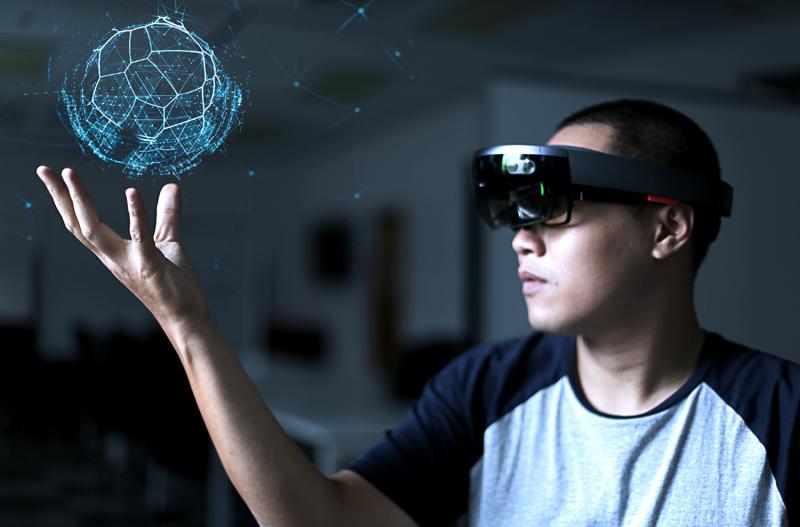
For example, devices like Microsoft HoloLens allow users to interact with holographic content within physical spaces. Therefore, digital content becomes part of everyday environments.
Because of this integration, immersive systems feel more natural and intuitive.
Enhancing User Engagement Through Immersion
Traditional digital platforms rely on screens and touch input. However, immersive systems enable users to move, gesture, and interact in three-dimensional space.
XR and MR transforming digital experiences provide:
- Real-time interaction
- Spatial awareness
- Natural gesture control
- Context-aware digital overlays
As a result, users remain engaged for longer periods. Moreover, immersive interaction improves information retention and brand recall.
Industry Applications Driving Transformation
- Education and Training
Immersive simulations improve learning outcomes. For instance, students can explore 3D models instead of reading static diagrams. Consequently, complex concepts become easier to understand.
- Healthcare
Medical professionals use XR for surgical planning and remote collaboration. Because of immersive visualization, precision and confidence increase.
- Retail and E-Commerce
Virtual showrooms allow customers to explore products in realistic environments. Therefore, decision-making becomes more informed and interactive.
- Manufacturing and Engineering
Engineers visualize prototypes at full scale before production. As a result, errors decrease and efficiency improves.
Across sectors, XR and MR transforming digital experiences create measurable business value.
The Role of AI and Spatial Computing
Artificial Intelligence enhances immersive systems by enabling adaptive interaction. For example, AI can personalize content based on user behavior.
Meanwhile, spatial computing ensures accurate object placement and environmental awareness. Companies such as Apple Inc. continue investing in spatial technologies to advance immersive ecosystems.
Together, AI and spatial computing power next-generation immersive platforms.
Benefits for Businesses
Organizations adopting XR and MR gain several strategic advantages:
- Higher customer engagement
- Improved training efficiency
- Reduced operational costs
- Stronger brand differentiation
Furthermore, immersive analytics provide real-time user insights. Therefore, companies can continuously optimize experiences.
Challenges and Considerations
Although XR and MR offer powerful benefits, challenges remain.
First, hardware costs can be high. Second, content development requires specialized expertise. In addition, user onboarding must be simple to ensure adoption.
However, rapid technological advancement is lowering barriers. As devices become more affordable and accessible, immersive adoption will accelerate.
The Future of Digital Transformation
XR and MR transforming digital experiences represent more than a trend. Instead, they signal a long-term shift toward immersive computing.
In the future, digital interfaces will move beyond screens. Users will interact with persistent 3D environments integrated into daily life.
Organizations that invest early in immersive innovation will lead digital transformation.
At SelectronWave Technologies, we combine technical expertise with user-centered design to build scalable and future-ready immersive solutions.
Conclusion
XR and MR are redefining how people experience digital content. By blending physical and digital worlds, immersive technologies create meaningful, interactive engagement.
As industries continue to evolve, XR and MR transforming digital experiences will become central to business growth and innovation.